People usually reach out to customer support with a specific goal: get a problem solved and move on.

Automation was supposed to make this process fast and easy, but customers often had to click through menus that didn’t match their question or chatted with a bot that pointed them to a help article when they just needed an answer. When they did reach an agent, sometimes they had to explain the situation all over again.
Generative AI (GenAI) changed that. For the first time, software could understand a question written in everyday language and answer it directly, based on a company’s own information. These capabilities quickly raised customer expectations and impacted how support teams work.
The next shift is already underway. Agentic AI, built on the same foundation, doesn’t stop at answering — it acts: AI agents can process refunds, reroute the shipments and update the accounts. Now, it’s a matter of how much of the work AI should be trusted to do in customer services, and how to set up the people around it.
How GenAI changed customer service
Earlier tools matched keywords. GenAI could understand what the customer meant and answer it. But these rule-based chatbots and keyword searches ran on fixed decision trees.
Unknowingly, the customer had to phrase statements and questions close to the script the AI learned. When a question fell outside its training, the bot’s usual response was a link to an additional resource with no guarantee of solving the problem at hand.
Today, many enterprise GenAI assistants pair a large language model (LLM) with retrieval-augmented generation (RAG). The LLM interprets the question; RAG pulls relevant, approved content from knowledge bases, policies and internal systems. Together they ground each answer in the company’s own information. The result feels less like searching a help center and more like asking someone who knows.
Where does GenAI make the biggest difference?
From the customer’s first question to the insights teams use after the conversation ends, GenAI has an impact, particularly in the following areas.
Conversational self-service
Instead of sending customers to a 40-page manual or a list of possibly relevant articles, conversational search reads the material for them and answers the actual question. For many routine requests, that’s all the customer needs.
Always-on availability
AI assistants can handle routine requests around the clock, so a customer locked out of their account at 2 a.m. can still get back in. Requests that need a person are queued with full context for the next available agent.
Multilingual support
GenAI can understand and respond in many languages, which helps teams serve customers in their preferred dialect without extensive staffing for every shift. For less common languages, or where wording carries legal or cultural weight, human review is better at keeping responses accurate and on-brand.
Real-time agent assist
During live calls and chats, GenAI acts as a co-pilot. It pulls up the customer’s record, suggests a response and points to the right policy while the conversation is still happening. Agents can spend less time searching and more time listening.
Sentiment and intent detection
GenAI can pick up frustration, confusion or urgency in both text and speech. In that moment, it can move a conversation up the queue or route it to a person before it boils over. Afterward, it helps show where customer journeys tend to break down.
Post-interaction work
AI can also draft the conversation summary and suggest issue codes before the agent has closed the ticket. That cuts manual data entry and gives quality assurance (QA) teams more consistent records to review.
Agent coaching and quality assurance
GenAI can review far more interactions than a manual process, surfacing patterns in agent performance, flagging moments worth coaching and suggesting targeted training. Supervisors get a broader view, and agents get feedback they can use on their next call.
Knowledge and operational insight
Every conversation becomes a data point. By analyzing interaction logs, GenAI can spot recurring issues, gaps in the knowledge base and outdated articles that give teams a practical starting point for fixing content, processes and support scripts.
Personalization at scale
Connected to a CRM, GenAI can draw on purchase history and past interactions, so a loyal customer isn’t treated like a stranger. Tailored interactions also create natural openings for relevant recommendations, turning some support conversations into a source of revenue.

How GenAI became the foundation for agentic AI
Agentic AI takes GenAI from answering to acting. It can plan steps, use the right tools and complete the work.
Automation that could act isn’t exactly new but it’s come a long way in a short time. Robotic process automation (RPA) and scripted workflows, as examples, have processed transactions and updated records for years. But they could only follow fixed rules. GenAI could understand messy, real-world requests, but could only answer.
Agentic AI combines the two. The LLM at the center still interprets the request, but it also works out what needs to happen, decides which steps to take and in what order, and calls on business systems to carry them out. RAG still grounds its decisions in company policy. The connection to tools such as order systems, billing platforms and scheduling software, along with guardrails that define what the AI may do on its own are all new.
That’s why the GenAI groundwork matters. A company with a clean knowledge base, well-documented policies and AI that already answers accurately is better positioned to advance to agentic AI.
What’s the difference between a GenAI assistant and an AI agent?
A GenAI assistant understands a question and generates a response: an answer for the customer, a suggested reply for an agent, a summary of the call, etc. A person, either the customer or the agent, still takes the action.
An AI agent is connected to the systems where the work happens, such as order management, billing, scheduling and the CRM system. Given a goal, it can plan the steps, use those systems and complete the task. Tell an assistant your package is headed to your old address, and it explains how to update it. Tell an agent, and it checks the order, confirms the new address, reroutes the shipment and sends a confirmation.
AI agents in customer experience (CX) operations already process returns and standard refunds, rebook travel, reset account access, update billing details and schedule service appointments. The common thread is tasks that follow a clear policy, touch a defined set of systems and happen thousands of times a day.
With this ability to act, agentic AI raises the stakes. A wrong answer can be corrected in a follow-up message, but a refund issued in error or an account changed without authorization is harder to undo.
Companies deploying agents need to define which actions an agent can take on its own, set thresholds above which a person must approve (a refund cap, for example) and log every action so it can be audited, reversed or improved.
In practice, most CX teams will blend these for some time: assistants for answering and drafting, AI agents for well-defined, high-volume tasks and people for everything that calls for judgment.
Measuring AI in customer service
Support teams have traditionally leaned on two metrics. Deflection rate is the share of contacts handled through self-service rather than an assisted channel. Containment rate is the share of interactions that stay within one tool, such as a chatbot, without escalating to a person. Both are useful for understanding volume. Neither tells you whether anything was resolved.
Deflection might be the most flattering number on a support dashboard but is also one of the least reliable. A session counts as deflected whether the customer got the right answer, gave up in frustration or got a wrong answer and will call back two days later, angrier, with a bigger problem. The dashboard can’t tell those apart.
To see the difference, follow the customer past the end of the chat:
- Repeat contacts. Compare automated sessions against follow-up contacts about the same issue within a set window, often one to three days. Subtract those repeat contacts and what’s left is a far more honest measure of resolution.
- Customer confirmation. A simple “Did this solve your issue?” adds direct evidence to the operational data.
- Handoff performance. When a case moves to a person, track how fast it reaches the right specialist and how long resolution takes from there.
- First-contact resolution (FCR). Was the issue solved in one interaction, whether by AI, a person or both?
- Task completion and reversals. For AI agents, track how often an agent finishes the task it starts and how often its actions are later corrected, reversed or escalated. A high completion rate means little if people are cleaning up after it.
Together, this journey can show where automation is truly delivering and where it’s not.
The power of a hybrid engine
The foundation of AI-assisted service is built on delivering based on the difference between a simple task and one that’s more nuanced. For example, a customer asking where their package is should never have to wait for a person. But a customer whose package contained a wedding dress, for a wedding on Saturday, needs an agent right away.
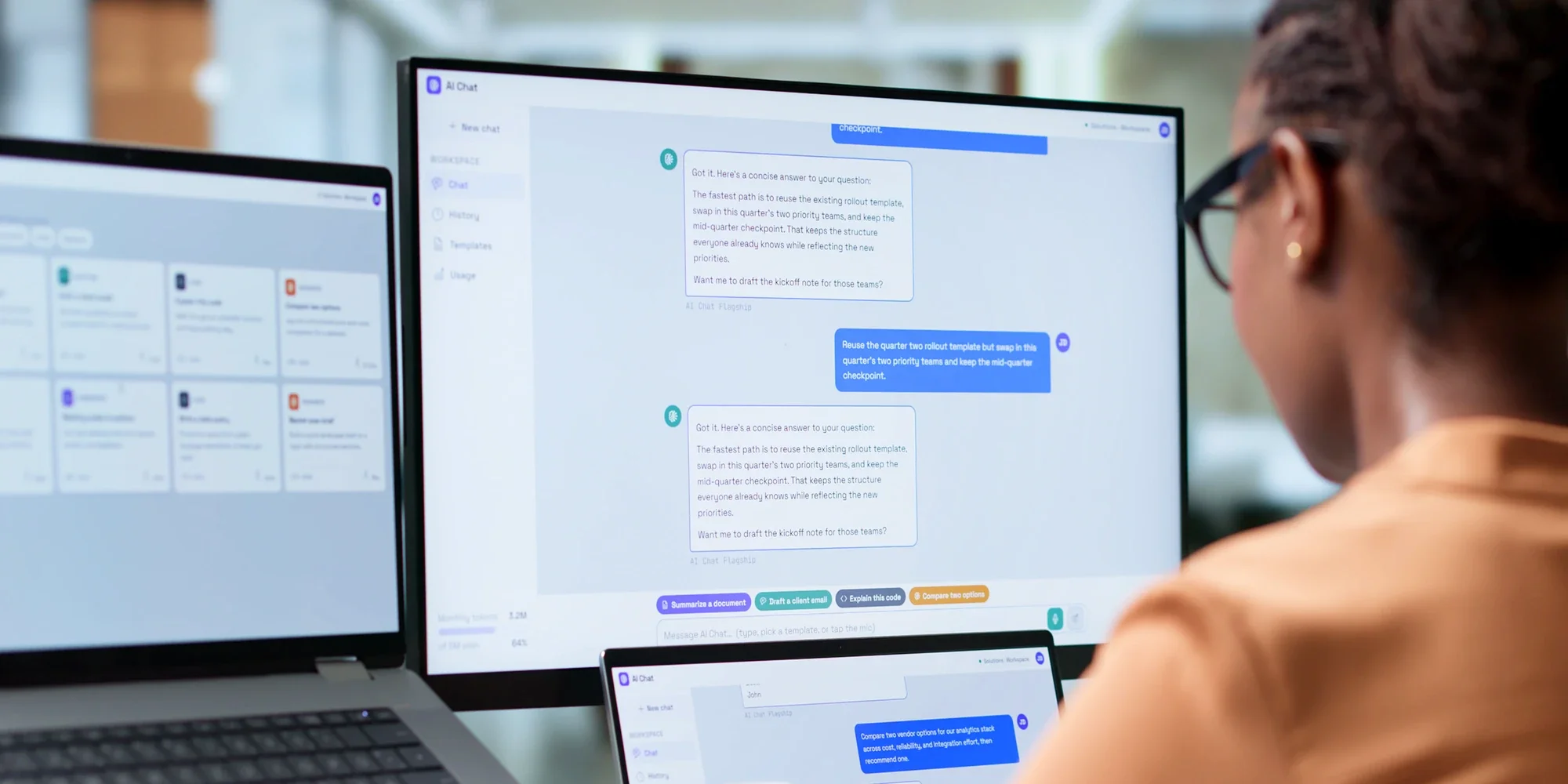
A hybrid engine, the right combination of people and technology, stands to result in the highest value. GenAI is fast, tireless and consistent to process information, recognize patterns and draft clear responses.
Agentic systems carry out routine tasks within set guardrails, while human judgment handles edge cases, emotionally charged conversations and decisions that require authority, like approving a policy exception. The handoff carries full context, and the customer never has to explain the problem twice.
Getting teams ready for more complex work
Here’s the part that catches many teams off guard: automation doesn’t make the agent’s job easier. It makes it harder.
Take away the password resets and order-status checks, and what’s left is a queue of escalations, edge cases and customers who have already tried self-service and are running out of patience. These cases often involve several steps, higher stakes or coordination across departments. At the same time, the role itself is changing. Agents are shifting from responders to supervisors of AI. They review and edit AI-generated drafts, approve actions above an AI agent’s limits and step in when an automated task goes off track.
Four changes help teams make the shift.
A unified workspace
An agent toggling between six tabs to find an order number isn’t listening to the customer. Bringing AI assistants, knowledge bases, customer history and live account data into one connected system keeps agents focused, and it helps make sure the AI is working from accurate, current information.
Updated training and QA
Script memorization matters less when the AI can draft the script. Training should shift toward diagnostic skills, reviewing AI output critically and advanced de-escalation. QA should follow: outcome-based scoring that rewards a thorough resolution, rather than call-duration targets that reward rushing one.
Broader decision authority and realistic baselines
AI can shorten individual tasks, but a queue made up of harder cases may still push average handle time (AHT) up overall. That’s not a performance problem. Give agents more authority to resolve issues on the spot, and set baselines that reflect the new case mix.
Wellness and resilience
Routine tickets used to give agents a breather between difficult conversations. When AI absorbs those, the breathers disappear. Strong programs build recovery back into the day through flexible breaks after tough interactions, resilience training and ongoing well-being monitoring.
What comes next?
Agentic AI is already working in customer service, but the potential is untold. A few possibilities are emerging:
- From reactive to proactive. Instead of waiting for a customer to report a delayed shipment or a failed payment, AI agents can spot the problem first, fix it where they can and let the customer know before they ever have to reach out.
- Agents working together. Rather than one AI handling everything, specialized agents for billing, logistics and technical support can pass tasks to one another, with an orchestration layer coordinating the work while people oversee the whole system.
- Voice that keeps up. Advances in speech technology mean AI agents can increasingly hold natural phone conversations, not just chats. That brings agentic service to the channel many customers still prefer for urgent problems.
- AI on both sides of the conversation. Customers are starting to use their own AI assistants to shop, book and resolve problems. Support operations will increasingly need to serve those assistants as well as people, with clear rules about what a customer’s AI is authorized to do on their behalf.
In any case, the human role continues to move up the value chain, evolving from handling every incoming contact, to resolving the most complex interactions, and ultimately supervising and continuously refining the intelligent systems that power the rest.


